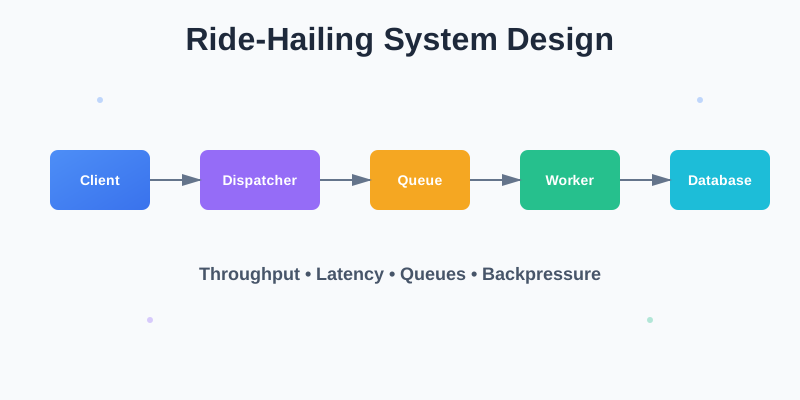
Interactive System Design: How a Ride-Hailing Service Handles Traffic Spikes
Welcome to Interactive System Design! 🚗
This tutorial uses a simple ride-hailing service to teach you how systems handle traffic. You’ll learn about throughput, latency, queues, and backpressure through hands-on experiments.
What You’ll Learn
By the end of this tutorial, you’ll be able to:
- ✅ Explain the difference between requests, throughput, latency, and concurrency
- ✅ Identify bottlenecks as load increases
- ✅ Understand why queues exist and when they help
- ✅ Apply backpressure and load shedding concepts
- ✅ Evaluate scaling strategies and their limits
Tutorial Structure
This tutorial is divided into 7 interactive pages (approximately 30 minutes):
- Tutorial Intro (3 min) - Set the scene and define the toy system
- Model the Basic System (5 min) - Understand synchronous request handling
- Add Load and Show Bottlenecks (6 min) - See what happens under pressure
- Introduce a Message Queue (6 min) - Learn how queues smooth traffic spikes
- Backpressure and Load Shedding (5 min) - Prevent system overload
- Scaling Patterns and Limits (5 min) - Vertical vs horizontal scaling
- Wrap-up and Checklist (3 min) - Practical takeaways
Interactive Features
Throughout this tutorial, you’ll experience:
- 🎚️ Interactive Sliders - Adjust traffic and see real-time effects
- 📊 Queue Visualizers - Watch requests queue up and process
- 🎬 Animated Timelines - See how requests flow through the system
- 📈 Live Metrics - Watch latency and throughput change
- 🔄 Architecture Toggles - Switch between different system designs
Prerequisites
Before starting, you should have:
- Basic understanding of REST APIs
- Familiarity with databases and web services
- Some experience with backend development
Don’t worry if you’re not an expert - we’ll explain concepts as we go!
Estimated Time
⏱️ 30 minutes to complete all 7 pages
You can take breaks between pages and resume anytime. Your progress will be tracked as you navigate through the tutorial.
The Problem We’re Solving
Quick Preview: We run a tiny ride-hailing service. Users tap a button to request a ride. Our dispatcher service finds a driver and confirms the ride.
What matters:
- Users want fast confirmation
- The business wants to handle traffic spikes without the system falling over
What you’ll learn:
- How to think about capacity and load
- When queues help and when they hurt
- How to prevent systems from crashing under pressure
- Simple scaling strategies and their limits
Ready to start? Click the button above to begin your system design journey!
Discussion
Loading comments...