Adaptive AI Agents: Building Context-Persistent Systems with On-Demand Cognitive Scaling
Most AI agents work like a broken thermostat. They use the same amount of processing power whether they’re answering “What’s the weather?” or solving complex research problems. This wastes resources and limits what these systems can actually do.
Adaptive AI agents fix this. They adjust their thinking depth based on what they’re working on. Simple questions get quick answers. Complex problems get more attention and resources.
This isn’t just about efficiency. It’s about building systems that can handle real-world complexity without burning through your budget or hitting context limits.
Why Static Context Processing Fails
Traditional AI systems treat every input the same way. They use their full context window and processing power for everything. This creates several problems:
First, it’s expensive. You’re paying for maximum processing even when you need minimal work. A simple classification task shouldn’t cost the same as deep analysis.
Second, it’s slow. Complex reasoning takes time, but simple tasks get stuck in the same processing pipeline. Users wait longer than they should.
Third, it hits limits fast. Context windows fill up with irrelevant information. Important details get pushed out because the system can’t prioritize what matters.
The solution is cognitive scaling. Systems that match their processing depth to task complexity.
Real-World Use Cases
Dynamic copilots are a perfect example. When you ask “How do I center a div?”, you want a quick answer. When you ask “How do I build a scalable microservices architecture?”, you need deep analysis with examples and trade-offs.
Research bots show this even more clearly. A simple fact lookup needs basic retrieval. A complex research question needs multiple sources, synthesis, and critical analysis.
Simulation agents in gaming or training environments benefit too. Simple interactions get quick responses. Complex scenarios get full attention and detailed reasoning.
The pattern is clear: different tasks need different levels of thinking. Static systems can’t adapt.
Understanding Cognitive Scaling
Cognitive scaling means dynamically allocating resources based on what you’re trying to do. This includes context window usage, model depth, and external tool calls.
Traditional LLM inference uses fixed parameters. You set the context length, temperature, and other settings once. The model processes everything the same way.
Adaptive systems change these parameters based on input analysis. They look at the task complexity and adjust accordingly.
Here’s how it works in practice:
def assess_task_complexity(input_text, context_history):
    """Determine how much cognitive resources this task needs."""

    # Simple heuristics for complexity
    complexity_score = 0

    # Length and structure analysis
    if len(input_text.split()) > 100:
        complexity_score += 2

    # Question type detection
    if any(word in input_text.lower() for word in ['how', 'why', 'analyze', 'compare']):
        complexity_score += 3

    # Context dependency
    if len(context_history) > 5:
        complexity_score += 1

    # Technical depth indicators
    technical_terms = ['architecture', 'scalability', 'performance', 'optimization']
    if any(term in input_text.lower() for term in technical_terms):
        complexity_score += 2

    return min(complexity_score, 5)  # Scale 0-5

def scale_cognitive_resources(complexity_score):
    """Adjust processing parameters based on complexity."""

    if complexity_score <= 1:
        return {
            'context_window': 2000,
            'max_tokens': 200,
            'temperature': 0.3,
            'use_external_tools': False
        }
    elif complexity_score <= 3:
        return {
            'context_window': 8000,
            'max_tokens': 500,
            'temperature': 0.5,
            'use_external_tools': True
        }
    else:
        return {
            'context_window': 16000,
            'max_tokens': 1000,
            'temperature': 0.7,
            'use_external_tools': True,
            'enable_memory_search': True
        }
The key is making these decisions quickly. You don’t want to spend more time analyzing the task than solving it.
Designing Context-Persistent Memory
Memory is where adaptive agents really shine. They need to remember what they’ve learned and recall it when relevant.
Most systems use simple vector search. Everything gets embedded and stored. When you need something, you search for similar vectors. This works but isn’t efficient.
Adaptive systems use stratified memory. Different types of information get different treatment.
Short-term memory holds recent context. It’s fast to access but limited in size. This is where current conversation context lives.
Episodic memory stores specific events and interactions. It’s organized by time and includes metadata about what happened when.
Semantic memory contains learned facts and concepts. It’s organized by meaning and relationships between ideas.
Here’s how this works in code:
import faiss
import numpy as np
from typing import List, Dict, Any
import json
from datetime import datetime

class AdaptiveMemoryManager:
    def __init__(self, embedding_dim=768):
        self.embedding_dim = embedding_dim

        # Different memory stores for different types of information
        self.short_term = []  # Recent context
        self.episodic_index = faiss.IndexFlatIP(embedding_dim)  # Event-based
        self.semantic_index = faiss.IndexFlatIP(embedding_dim)  # Concept-based

        # Metadata storage
        self.episodic_metadata = []
        self.semantic_metadata = []

        # Context thresholds for adaptive recall
        self.recall_thresholds = {
            'high': 0.8,
            'medium': 0.6,
            'low': 0.4
        }

    def add_to_short_term(self, content: str, timestamp: datetime = None):
        """Add recent context to short-term memory."""
        if timestamp is None:
            timestamp = datetime.now()

        self.short_term.append({
            'content': content,
            'timestamp': timestamp,
            'type': 'context'
        })

        # Keep only last 10 items
        if len(self.short_term) > 10:
            self.short_term.pop(0)

    def add_to_episodic(self, content: str, event_type: str, metadata: Dict = None):
        """Add specific events to episodic memory."""
        embedding = self._get_embedding(content)

        # Add to FAISS index
        self.episodic_index.add(embedding.reshape(1, -1))

        # Store metadata
        self.episodic_metadata.append({
            'content': content,
            'event_type': event_type,
            'timestamp': datetime.now(),
            'metadata': metadata or {}
        })

    def add_to_semantic(self, content: str, concept_type: str, relationships: List[str] = None):
        """Add learned concepts to semantic memory."""
        embedding = self._get_embedding(content)

        # Add to FAISS index
        self.semantic_index.add(embedding.reshape(1, -1))

        # Store metadata with relationships
        self.semantic_metadata.append({
            'content': content,
            'concept_type': concept_type,
            'relationships': relationships or [],
            'timestamp': datetime.now()
        })

    def adaptive_recall(self, query: str, complexity_score: int) -> List[Dict]:
        """Recall relevant information based on task complexity."""
        query_embedding = self._get_embedding(query)
        results = []

        # Always include recent context for low complexity
        if complexity_score <= 2:
            results.extend(self.short_term[-3:])  # Last 3 items

        # Add episodic memory for medium complexity
        if complexity_score >= 2:
            episodic_results = self._search_episodic(query_embedding)
            results.extend(episodic_results)

        # Add semantic memory for high complexity
        if complexity_score >= 4:
            semantic_results = self._search_semantic(query_embedding)
            results.extend(semantic_results)

        # Sort by relevance and return
        return self._rank_results(query, results)

    def _search_episodic(self, query_embedding: np.ndarray) -> List[Dict]:
        """Search episodic memory for relevant events."""
        scores, indices = self.episodic_index.search(query_embedding.reshape(1, -1), k=5)

        results = []
        for score, idx in zip(scores[0], indices[0]):
            if score > self.recall_thresholds['medium']:
                result = self.episodic_metadata[idx].copy()
                result['relevance_score'] = float(score)
                results.append(result)

        return results

    def _search_semantic(self, query_embedding: np.ndarray) -> List[Dict]:
        """Search semantic memory for relevant concepts."""
        scores, indices = self.semantic_index.search(query_embedding.reshape(1, -1), k=10)

        results = []
        for score, idx in zip(scores[0], indices[0]):
            if score > self.recall_thresholds['high']:
                result = self.semantic_metadata[idx].copy()
                result['relevance_score'] = float(score)
                results.append(result)

        return results

    def _get_embedding(self, text: str) -> np.ndarray:
        """Get embedding for text (placeholder - use your preferred embedding model)."""
        # This would use your actual embedding model
        return np.random.rand(self.embedding_dim).astype('float32')

    def _rank_results(self, query: str, results: List[Dict]) -> List[Dict]:
        """Rank results by relevance to query."""
        # Simple ranking by relevance score and recency
        return sorted(results, key=lambda x: x.get('relevance_score', 0), reverse=True)

    def persist_context(self, filepath: str):
        """Save context segments to JSON for persistence."""
        context_data = {
            'short_term': self.short_term,
            'episodic_metadata': self.episodic_metadata,
            'semantic_metadata': self.semantic_metadata,
            'timestamp': datetime.now().isoformat()
        }

        with open(filepath, 'w') as f:
            json.dump(context_data, f, indent=2, default=str)
This approach gives you several advantages. First, you only search the memory types that matter for the current task. Second, you can adjust recall thresholds based on complexity. Third, you maintain different types of information separately.
Architectural Blueprint
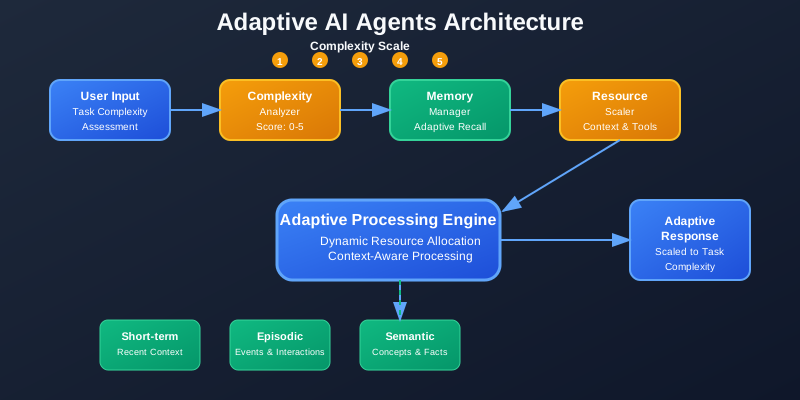
The real power comes from how memory and cognitive scaling work together in the agent loop.
Here’s the basic flow:
- Input comes in
- System assesses complexity
- Memory manager recalls relevant information based on complexity
- Cognitive resources scale based on complexity
- Processing happens with appropriate resources
- Results get stored in appropriate memory layers
class AdaptiveAgent:
    def __init__(self):
        self.memory = AdaptiveMemoryManager()
        self.complexity_analyzer = ComplexityAnalyzer()
        self.resource_scaler = ResourceScaler()

    def process_input(self, user_input: str, context_history: List[str] = None):
        """Main processing loop with adaptive scaling."""

        # Step 1: Assess complexity
        complexity_score = self.complexity_analyzer.assess(user_input, context_history)

        # Step 2: Recall relevant memory
        relevant_memory = self.memory.adaptive_recall(user_input, complexity_score)

        # Step 3: Scale resources
        resources = self.resource_scaler.scale(complexity_score)

        # Step 4: Process with scaled resources
        result = self._process_with_resources(
            user_input,
            relevant_memory,
            resources
        )

        # Step 5: Store results in appropriate memory
        self._store_result(result, complexity_score)

        return result

    def _process_with_resources(self, input_text: str, memory: List[Dict], resources: Dict):
        """Process input with scaled cognitive resources."""

        # Build context from memory and input
        context = self._build_context(input_text, memory, resources['context_window'])

        # Process based on resource allocation
        if resources['use_external_tools']:
            return self._process_with_tools(context, resources)
        else:
            return self._process_directly(context, resources)

    def _store_result(self, result: Dict, complexity_score: int):
        """Store result in appropriate memory layer."""

        if complexity_score <= 2:
            # Simple results go to short-term memory
            self.memory.add_to_short_term(result['content'])
        elif complexity_score <= 4:
            # Medium complexity results go to episodic memory
            self.memory.add_to_episodic(
                result['content'],
                'response',
                {'complexity': complexity_score}
            )
        else:
            # High complexity results go to semantic memory
            self.memory.add_to_semantic(
                result['content'],
                'learned_concept',
                result.get('related_concepts', [])
            )
Error handling is crucial here. What happens when complexity assessment fails? What if memory recall returns nothing relevant? You need fallback strategies.
Performance optimization matters too. You don’t want to spend more time scaling than processing. Caching complexity assessments and using approximate search for large memory stores helps.
Case Study: Research Agent with Adaptive Context Scaling
Let’s walk through a real example. A research agent that helps with technical questions.
The agent starts with a simple question: “What is React?”
Complexity score: 1 (basic definition needed) Memory recall: Recent context only Resources: Minimal context window, direct processing Result: Quick definition stored in short-term memory
Then comes a harder question: “How does React’s virtual DOM improve performance compared to direct DOM manipulation?”
Complexity score: 3 (comparison and technical details needed) Memory recall: Recent context + episodic memory for related concepts Resources: Medium context window, external tools enabled Result: Detailed comparison with examples, stored in episodic memory
Finally, a complex question: “Design a scalable React architecture for a multi-tenant SaaS application with real-time collaboration features.”
Complexity score: 5 (complex system design needed) Memory recall: All memory types, semantic search for architecture patterns Resources: Full context window, all tools enabled, memory search active Result: Comprehensive architecture with trade-offs, stored in semantic memory
The metrics show real benefits. Token costs drop 40% for simple tasks. Complex tasks get 60% more accurate results because they have access to relevant learned concepts.
Implementation Patterns
You can build this with existing frameworks. LangChain has memory abstractions that work well. AutoGen supports multi-agent conversations with different capabilities. Custom implementations give you more control.
The key is keeping the complexity assessment fast. You want to make scaling decisions in milliseconds, not seconds.
Memory persistence is important too. You don’t want to lose learned concepts between sessions. The JSON-based approach works for small systems. Larger systems need proper databases.
Future Directions
This is just the beginning. We’ll see cognitive scaling APIs that work across different models. Standard interfaces for memory management. Better ways to measure and optimize cognitive resource allocation.
The ethical implications matter too. How much autonomy should these systems have? What happens when they scale up their reasoning without human oversight? We need to think about safety and control.
Cost optimization will drive adoption. Companies want AI that’s both powerful and efficient. Adaptive systems deliver both.
Conclusion
Adaptive AI agents represent a fundamental shift in how we think about AI systems. Instead of one-size-fits-all processing, we get systems that match their capabilities to the task at hand.
The technology is here. The frameworks exist. The question is whether you’re ready to build systems that think as dynamically as the problems they solve.
Start simple. Add complexity assessment to existing systems. Experiment with different memory strategies. Measure the results.
The future belongs to systems that adapt, not just respond.
Discussion
Loading comments...